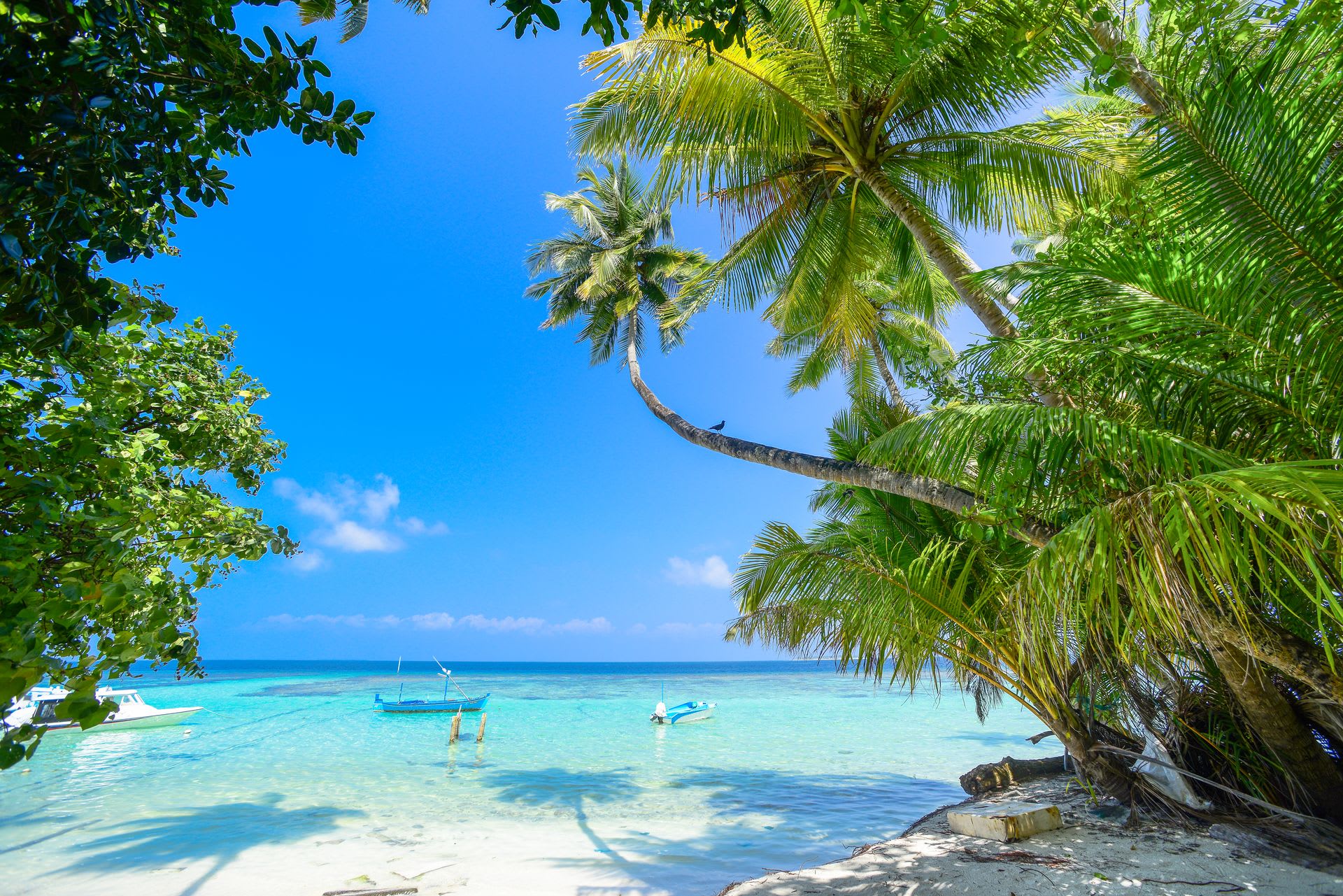
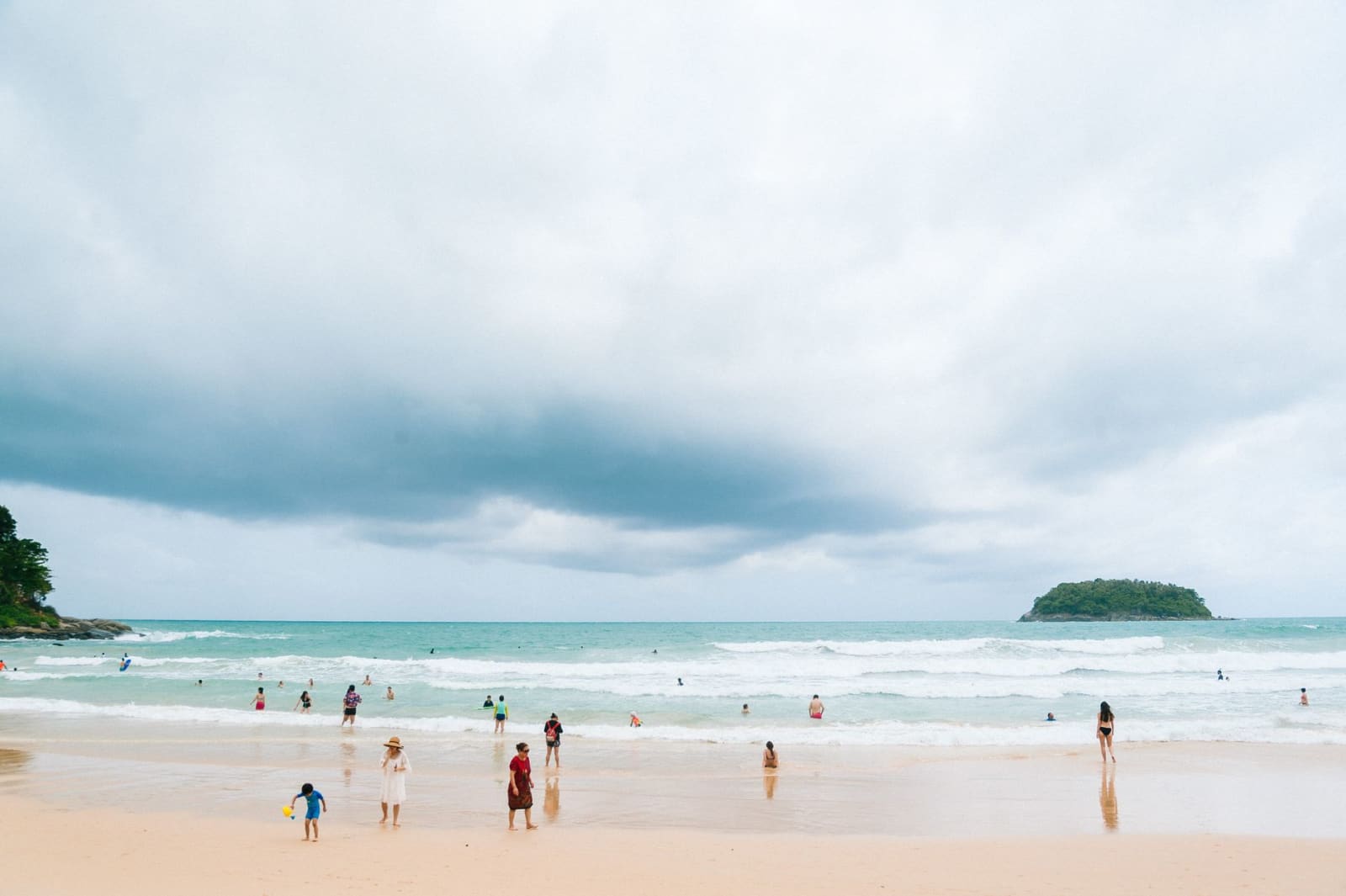
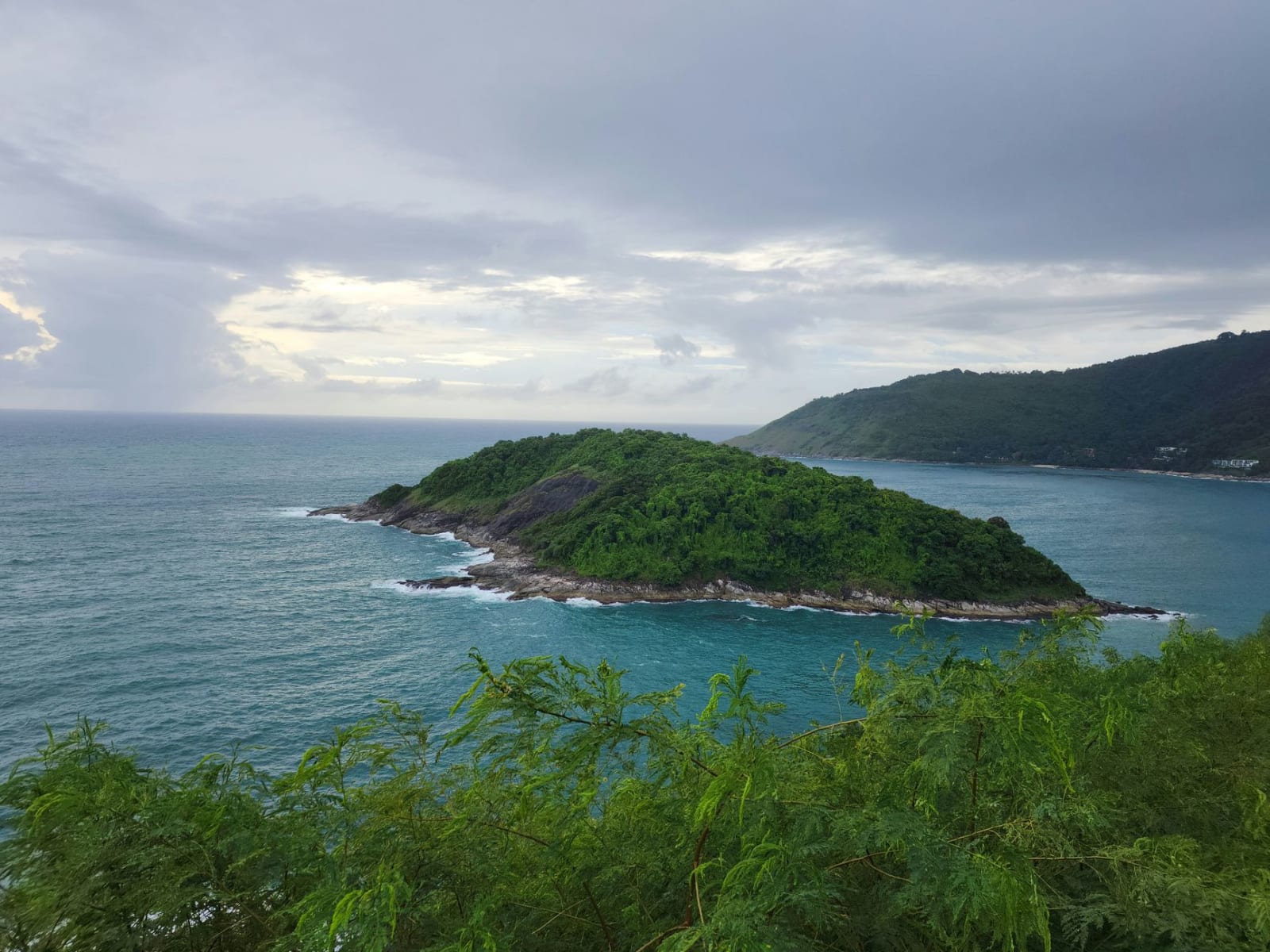
Phuket does not have one beach. It has a chain of separate bays down its western flank, divided by headlands, each with its own crowd, depth and sea state. The bay you pick decides how far you walk to dinner, whether the water is swimmable in the month you arrive, and how much company you have on the sand.
Why almost every beach faces west
A ridge of forested hills runs the length of the island and the sand collects on its seaward side. The eastern shore looks across shallow water to the mainland and is given over to piers, boatyards, mangrove and rock: Chalong, Rassada and Cape Panwa are working coastline, not swimming coastline.
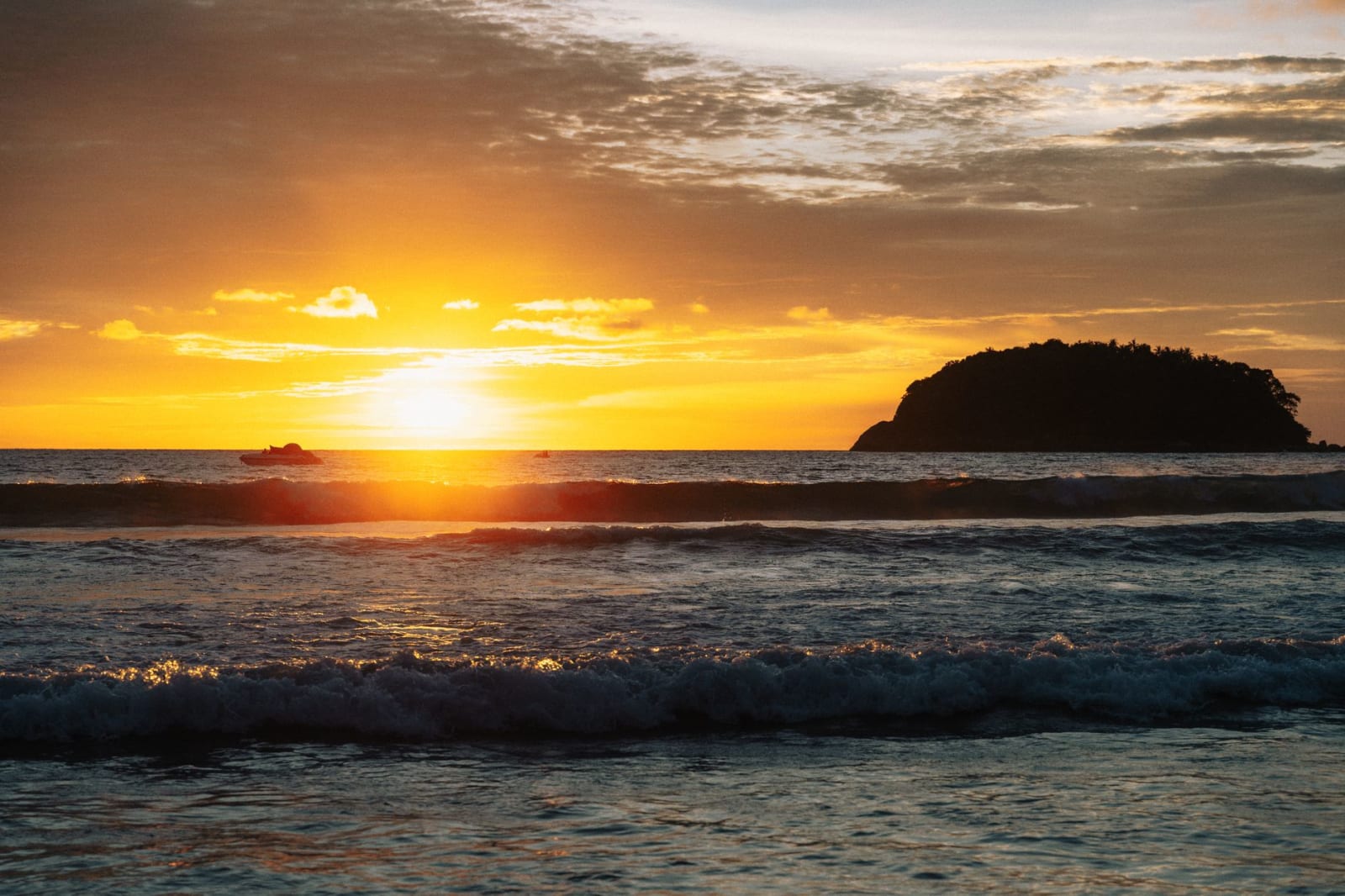
Two things follow. The sun sets into open sea from every bay, which is why the beachfront restaurants fill from about five o'clock, and the coast takes the southwest monsoon full on, with no island upwind to break the swell.
The two seasons, and the red flags
From roughly November to April the wind blows from the northeast, off the land. The Andaman flattens, visibility improves, and every bay here swims well. That is high season, and prices follow it.
From May to October the southwest monsoon blows onshore. Surf builds on the open stretches, the water clouds after rain, and rip currents form: narrow channels of water escaping back out to sea, often through a gap in a sandbar, moving faster than anyone can swim against. Drownings happen at Patong, Karon and Kata every year, concentrated in these months.
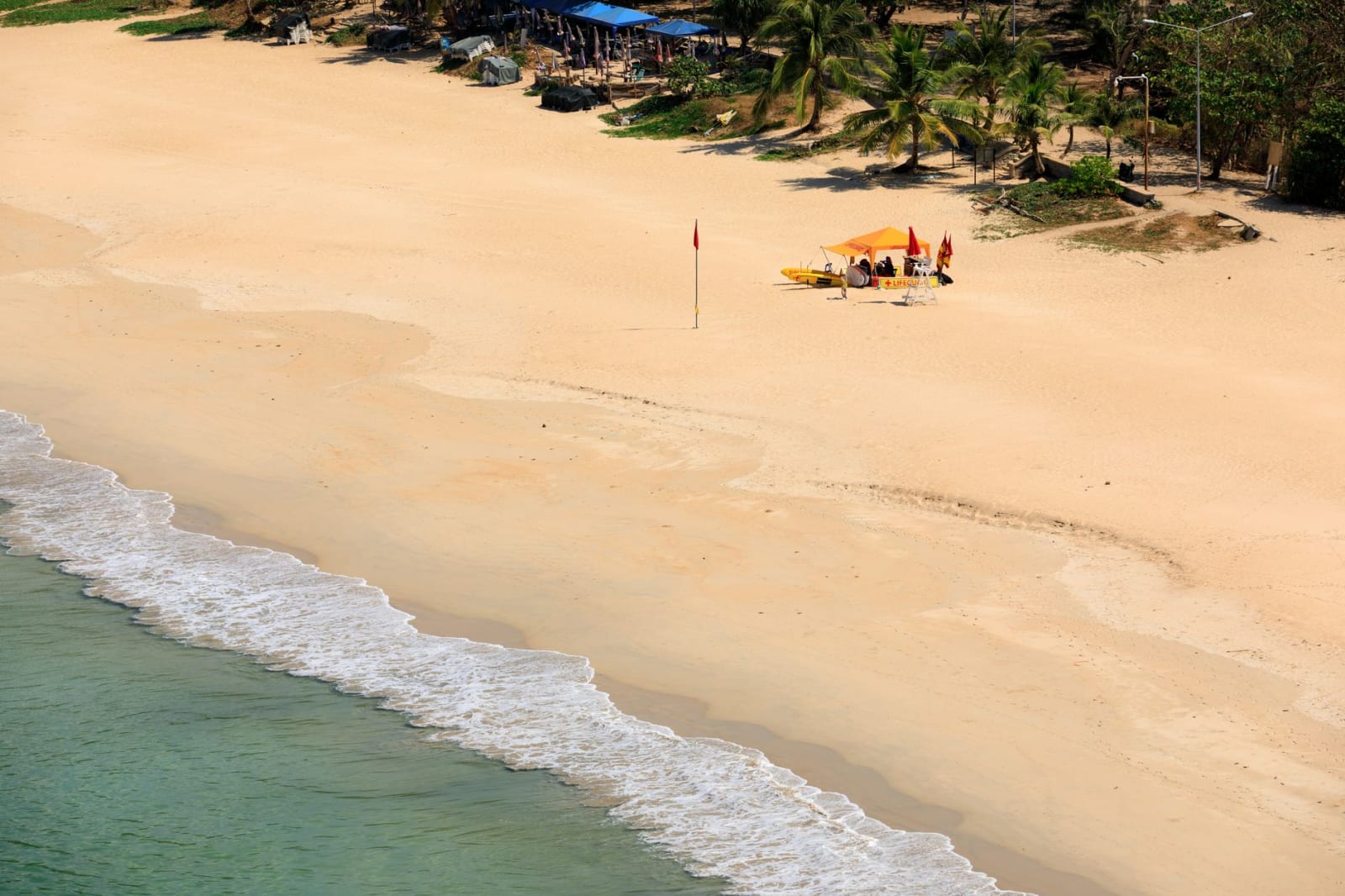
The rule is simple and it is not advisory. If a red flag is flying, do not enter the water. Not for a paddle, not because other people are in, not because the sea looks calm near the shore. Two red flags mean the beach is closed; yellow means take care. Lifeguards patrol the main west-coast beaches, but not every beach, and not after dark. If a rip does catch you, do not swim back the way you came: let it carry you, keep your head up, swim parallel to the shore until the pull eases, then come in at an angle.
Patong, Karon and Kata: the busy middle
Patong is the island's engine room, a three-kilometre bay backed by the densest run of hotels, restaurants and nightlife in southern Thailand. The sand is better than the town's reputation suggests, and in high season it carries loungers, parasailing and jet skis. The northern Kalim end is rockier and quieter. Freedom Beach, over the southern headland, is reached by longtail boat rather than by road.
One headland south, karon is around three kilometres of wide, steeply shelving sand backed by a grassy dune and a broad beach road instead of a shopfront strip. The dune keeps it calmer than Patong even in peak weeks; the steep shelf is why the shore break hits hard once the monsoon arrives. Watch small children at the water's edge.
Kata curls into a sheltered crescent below green hills and is the island's surf beach. The break works from May to October, exactly when swimming is worst, so the surf schools run through the green season while the loungers come out in high season. Club Med holds a long stretch of frontage, with public access at either end.
The south: Kata Noi, Nai Harn and Rawai
Kata Noi is a few hundred metres of fine sand behind the next headland, wrapped by steep hills and reached by one road over the ridge. No through traffic passes, because there is nowhere to drive to, which is most of the reason it stays quiet even in February. Two resorts take the frontage, with a few restaurants and massage shops at the northern access.
Nai Harn at the southwest corner is many residents' pick for the best swimming bay on the island: a compact white curve with clear water and a beachfront never built out, because a freshwater lagoon and a monastery sit behind it. Lifeguards are posted in season and the monsoon shore break is heavy. Ya Nui, a cove a few minutes south, is smaller again and good for a snorkel on a calm day.
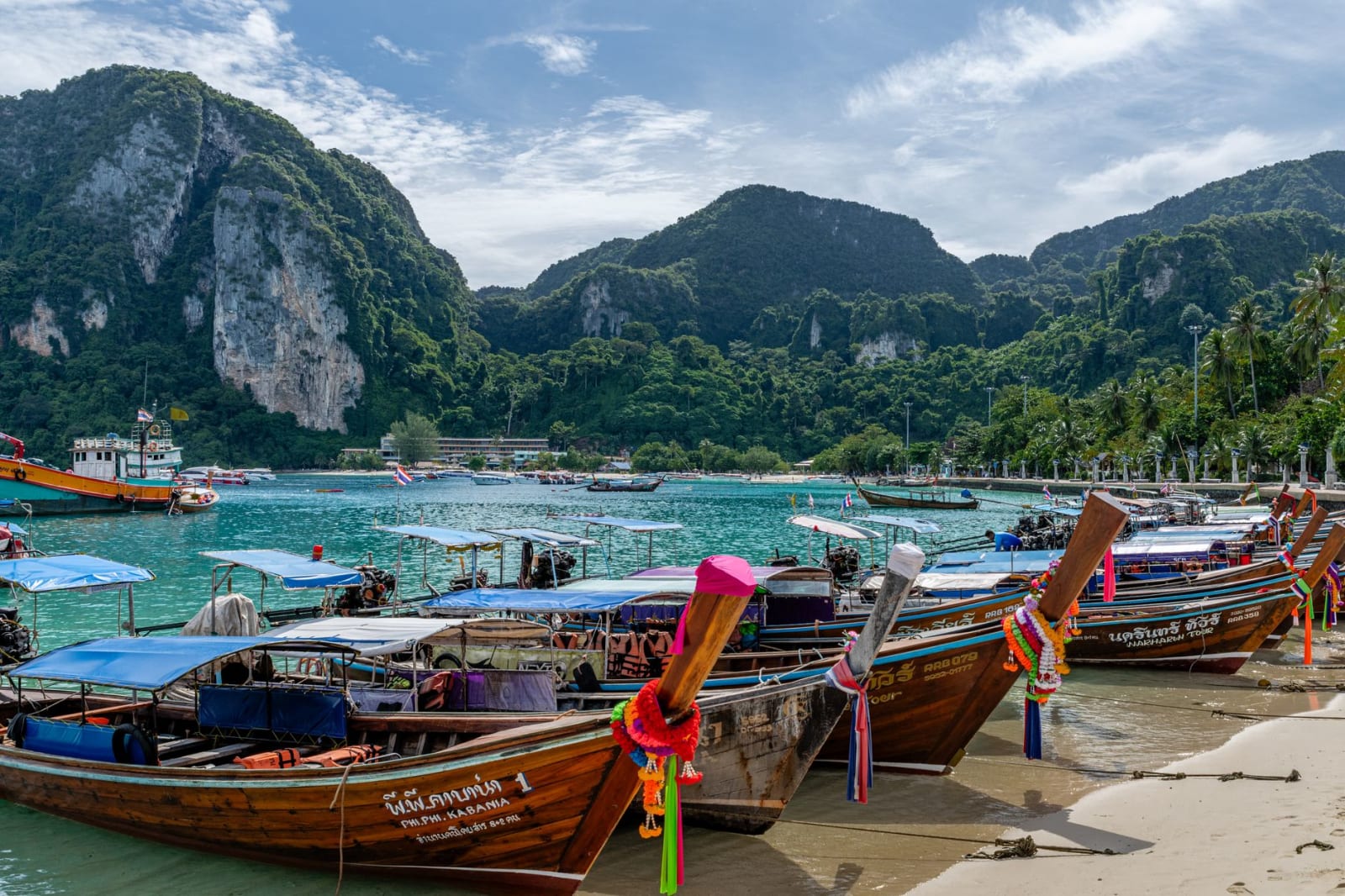
Rawai faces east and is shallow and rocky. Treat it as a working shore: fish, prawns and shellfish bought from the market stalls and cooked by the restaurant next door, and a longtail pier that is the departure point for boat tours to Coral Island, Racha Yai and Bon Island. Swim at Nai Harn, eat at Rawai.
Kamala, Surin and Bang Tao
North of Patong the coast calms abruptly. Kamala keeps a genuine village at the southern end of its two-kilometre beach, built around a long-standing Muslim fishing community, with resorts at the quieter northern end. Surin is short, casuarina-backed and steeply shelving; its beach clubs were removed in a national reclamation programme, so the sand is now mostly open and the eating and drinking happens on the access road above.
Bang Tao runs about six kilometres, with the Laguna resort estate across its northern half and the island's main concentration of beach clubs at the southern end. Those are the places for a day bed, a pool and table service, and they generally ask a minimum spend rather than a gate fee.
The northern park beaches
Nai Thon sits in a bay closed by headlands at both ends, low-rise and small, with reef at the rocky edges that gives some of the better shore snorkelling on this coast in the calm months. Nai Yang, inside Sirinat National Park and ten minutes from the terminal, has a casuarina belt for shade and open-sided Thai seafood restaurants directly on the sand.
Mai Khao is the longest beach on Phuket, about eleven kilometres of park shoreline running north from the airport with no beach road and no shopfront strip. Leatherback and olive ridley turtles nest here between November and February. Almost empty, it is also the beach that most rewards caution: it shelves steeply in places and holds rip currents.
Loungers, shade and what to expect
On the busy beaches, loungers and umbrellas are rented within marked zones and the rest of the sand stays clear, so you can always sit on your own towel. Natural shade is scarce except where casuarina and pine back the beach: Nai Yang, Surin and Mai Khao. Showers, toilets and food sit a minute from the sand at Patong, Karon, Kata, Kamala and Bang Tao, and a walk or a drive away at Kata Noi, Nai Thon and Mai Khao. Families do best at Kata, Kamala and Nai Harn, surfers at Kata in the green season, and anyone after a quiet day at Kata Noi, Nai Thon or the park beaches.