Phuket runs roughly 50 km north to south and songthaews mostly shuttle in and out of the town rather than beach to beach, which is why so many visitors drive themselves. It is also the part of the trip most likely to go wrong.
The licence rules that actually get checked
Thailand recognises a foreign licence only when it is accompanied by an International Driving Permit. Your home licence alone is not enough, whatever the rental shop says as it hands over the keys. The permit is issued in your own country before you travel; you cannot obtain one after you land.
Police checkpoints appear regularly on the roads into patong and at the island's main junctions, and they do ask for it. More seriously, rental cover and travel policies alike treat an unlicensed driver as uninsured, so a permit you skipped turns a minor collision into a bill you pay in full. For a scooter, your licence needs a motorcycle entitlement and the permit needs its motorcycle category filled in; a car licence does not cover two wheels.
Insurance, deposits and your passport
Every registered vehicle here carries compulsory third-party insurance, which pays a limited amount towards injury and almost nothing else; what matters on a hire car is the voluntary cover on top. First-class insurance is the top tier: it covers damage to the vehicle you are driving even when the fault is yours, plus third-party damage, fire and theft. Anything below that leaves you paying for your own car.
First-class cover still carries an excess, and the excess varies between firms far more than the daily rate does. Get that figure in writing before booking, along with the treatment of tyres, glass, undercarriage and roof, which are commonly excluded.
Scooter hire is a different world. Many shops carry the compulsory minimum only, so a dropped bike becomes a repair bill the shop assesses itself, and injury to the rider is rarely covered. Travel policies often exclude motorcycles outright, or void a claim if the licence and helmet conditions were not met.
Do not leave your passport as a deposit. It is your legal identity here, hotels need it, and you lose all leverage if the shop later disputes a scratch. Offer a photocopy and a cash deposit instead, and film the vehicle from every angle before you drive away.
Helmets are compulsory for rider and pillion, enforced with fines collected at the roadside. The fine is the least of it: head injuries are what make Thai road statistics as grim as they are, and the helmet thrown in with a rental scooter is often a thin shell with a perished strap. Riding for more than a day or two justifies buying a decent one locally.
Helmets, and whether to take a car or a scooter
A small automatic car is the sensible default for families, for visits between May and October, and for anyone crossing the island regularly rather than pottering within one beach town. Child seats are seldom fitted as standard, so ask when you book phuket car rental rather than at collection.
Scooters win on cost, on parking and on the narrow lanes behind the beaches, and lose the moment you add luggage, a passenger on a hill, or heavy rain. If you have never ridden, Phuket traffic is a poor classroom: Scooter rental shops will hand a 125cc automatic to anyone who asks, which is precisely the problem. Riders wanting more machine for the runs north into Phang Nga will find motorcycle rental concentrated around chalong and the south.
The roads themselves, and what rain does to them
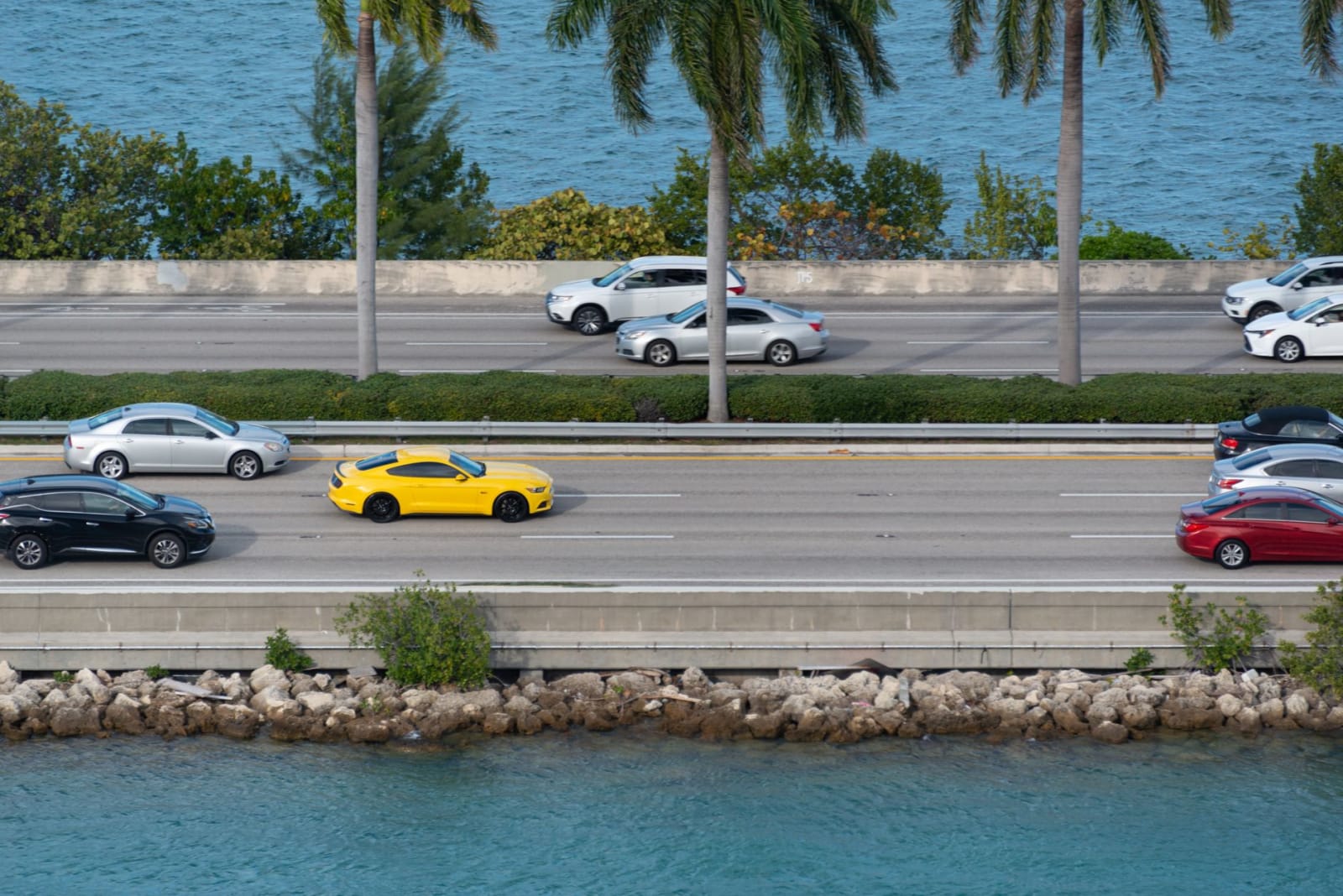
Traffic runs on the left, overtaking is on the right, roundabouts turn clockwise, and motorcycles filter up the inside, so check your left mirror before every left turn and kerbside stop. Turning left on a red light is allowed only where a sign permits it.
Three routes carry most of the island. Thepkrasattri Road (Route 402) is the north-south spine, running from the town past the airport turn-off to the Sarasin Bridge, the only road link to the mainland, with the long quiet strand at mai khao just off it. The bypass road skirts the built-up east side and is the fast way between coasts without touching the town centre. Route 4029, the Kathu pass, climbs over the ridge into Patong.
That hill deserves respect: short, steep, tightly curved in both directions, and where the island's brake failures and scooter crashes concentrate. Descending, select a low gear and let the engine hold the vehicle rather than riding the brakes to the bottom. Two people on an underpowered scooter will struggle both ways, and the coast road on towards kata and Karon is steeper again in places.
The southwest monsoon runs roughly May to October. Rain arrives as short violent downpours rather than all-day drizzle, and the opening minutes are the dangerous part: oil lifts off the tarmac, painted markings and metal covers turn slick, and visibility collapses behind the spray. Drainage on the beach roads is quickly overwhelmed, so expect standing water at the low points and never ride into water of unknown depth beside a kerb you cannot see. Locals pull under an awning and wait it out.
Fuel, parking and tolls
There are no toll roads on Phuket. Petrol stations on the main routes are staffed, so state an amount in baht or ask for full. The kerbside bottle stands in villages are a scooter top-up of last resort, not a fuelling plan, and usually the priciest fuel around.
Parking is informal nearly everywhere except phuket town, where kerbs painted red and white mean no stopping and are enforced. The town keeps public car parks near the old quarter.
Hazards that catch visitors out
Sand blows across the coastal bends by every beach access and behaves like gravel under a front tyre. Street dogs sleep on warm tarmac and move unpredictably at dusk. Back roads are unlit and plenty of local bikes run without working lights, which makes night riding on unfamiliar roads the riskiest thing most visitors do. Alcohol is checked with roadside breath tests, the legal limit is low, and a positive reading voids your insurance entirely.
After a collision, leave the vehicles in place until the insurer's assessor attends, since Thai claims are usually settled at the scene; 1669 is the ambulance line and 1155 the tourist police.
Arriving at the airport
Phuket Airport sits on the northwest coast, around an hour from the west-coast resorts in normal traffic and longer at the end of the day. Collect a car at an arrivals desk and drive out, or take a transfer to your hotel and have a local firm deliver the vehicle next morning; delivery is common enough here that the airport counter is a convenience rather than a necessity. Confirm the excess, the fuel policy and the return time before you sign.